What to Expect at a Murder Mystery Party
While every murder mystery night is different, there are a few things I always expect when I attend (and when I host). My expectations are characters for the guests to play, a mystery for everyone to solve, and a solution at the end.
Those are the must-have elements for most of these games, so I’ll cover them first. I’ll walk through each of them below. My goal is to share what happens at a murder mystery party.
I’ll give my perspective as a game designer, a party host, and a guest at these events.
I also have some loose expectations based on my experience. These might be more unique to my region or my group of acquaintances, so they may not apply universally. Those include things like food, humor, and light improv. I’ll cover those next.
How Do Characters Work in a Murder Mystery Party?
Characters in a murder mystery party are handed out before the event, either when you arrive or when you sign up to attend. I’ve done it both ways. As a guest, I prefer to get my character early. That gives me options for costumes. Even if nobody else is in costume, I can have some visible distinction that identifies me with whoever I’m playing.
As a doctor, I could wear a stethoscope around my neck. Or I could show up with a trowel and gardening gloves if I’m playing a groundskeeper.
A better example might come from my actual experience. When I last played a deck-based murder mystery dinner party, I didn’t know who I would be playing until the event started. We got our characters when we arrived. I ended up playing the brother of a wealthy socialite.
What I did know before the event was the setting. We were playing at a wealthy estate in New York in the 1920s. That gave me enough information to show up in a suit. I also felt fine bringing a pocket watch on a chain.
These were small details, but they fit the setting. They also helped inform my character when I figured out exactly who I would be playing.
As a murder mystery party host, I prefer to hand out most characters at the event as soon as my guests arrive. Some people flake on events or get sick and can’t attend. That’s ok. Giving out characters to my players when they arrive solves the problem.
Character sheets or booklets vary by game. Some games follow a basic act-by-act script. They tell players what they need to hide and reveal each round. These are usually booklets that tell players exactly what to do. They tell you when to turn the page and, just as importantly, when not to.
Some character sheets are just a page or a playing card. These usually give players more room to improvise, but they’ll also usually tell the guest whether they’re playing a suspect or the actual culprit.
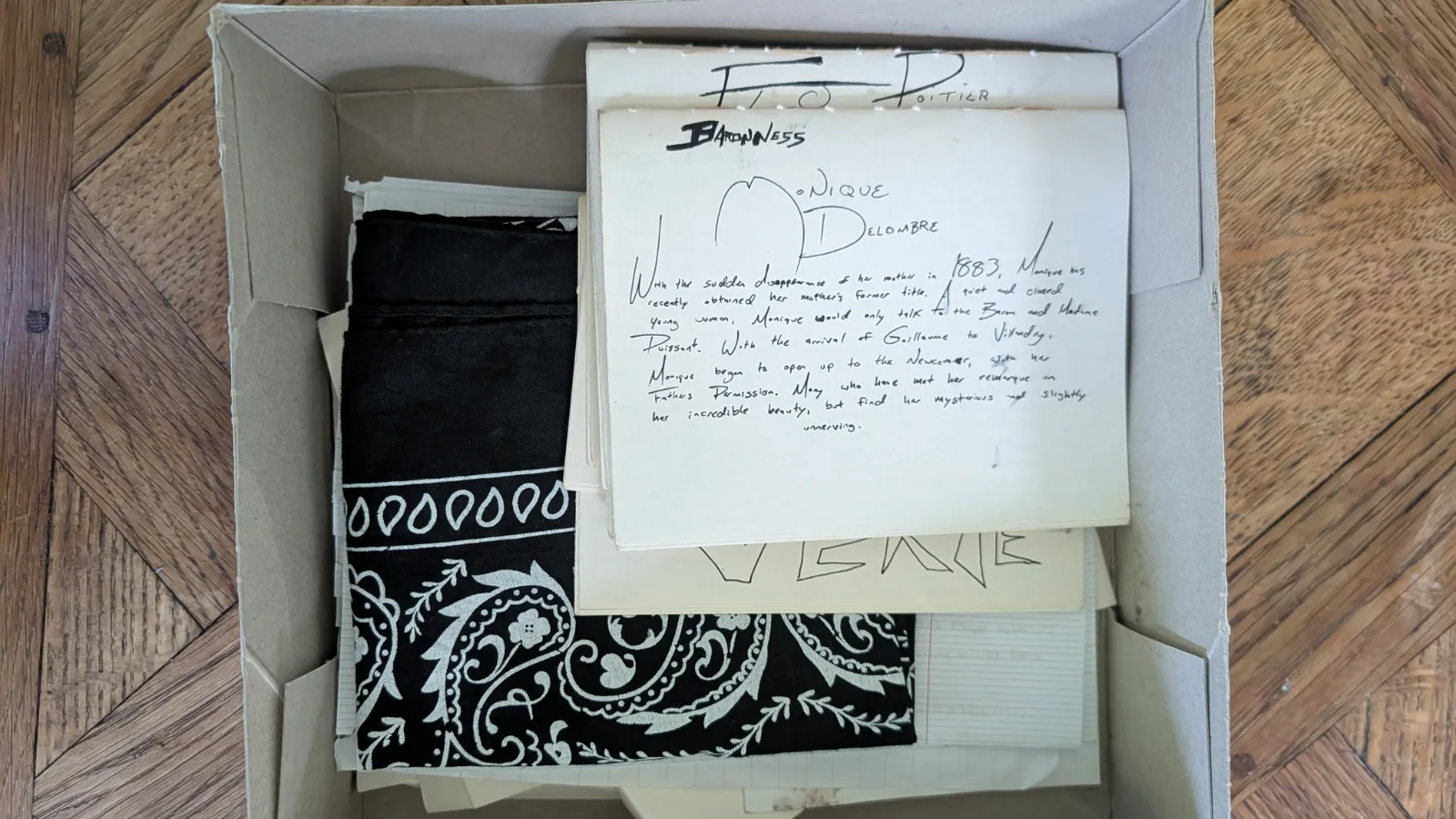
Character booklets can sometimes hide information from players until they need to know specific facts. In those cases, a player might not even know they’re the real culprit until the last act of the game.
When I write murder mystery games, I prefer to design with player knowledge built in. I love playing these games, and I want as much information up front as possible. So my games tend to give players exactly that.
How Much Prep Is There For a Murder Mystery Party (As a Guest)?
Prep time for a murder mystery party depends on what game you’re playing.
Most games start pretty quickly. You get a character, establish some early goals, understand what you’re hiding, and start interacting within ten minutes or so.
Other games, including jubensha games, give characters time to read short character backgrounds before the game starts. Jubensha translates to “script murder,” and that comes from this part of the game design. Players get a bunch of information at the top of the game so they understand motivations, pain points, and the overall story points before the game begins.
I’m working on a game that uses short booklets to give players this information. That game, The Elderflower Inn, isn’t out yet. When I playtested it with a group a week or two ago, it took about 15 minutes for everyone to read through their books at the table before we got up and started talking to each other in character.
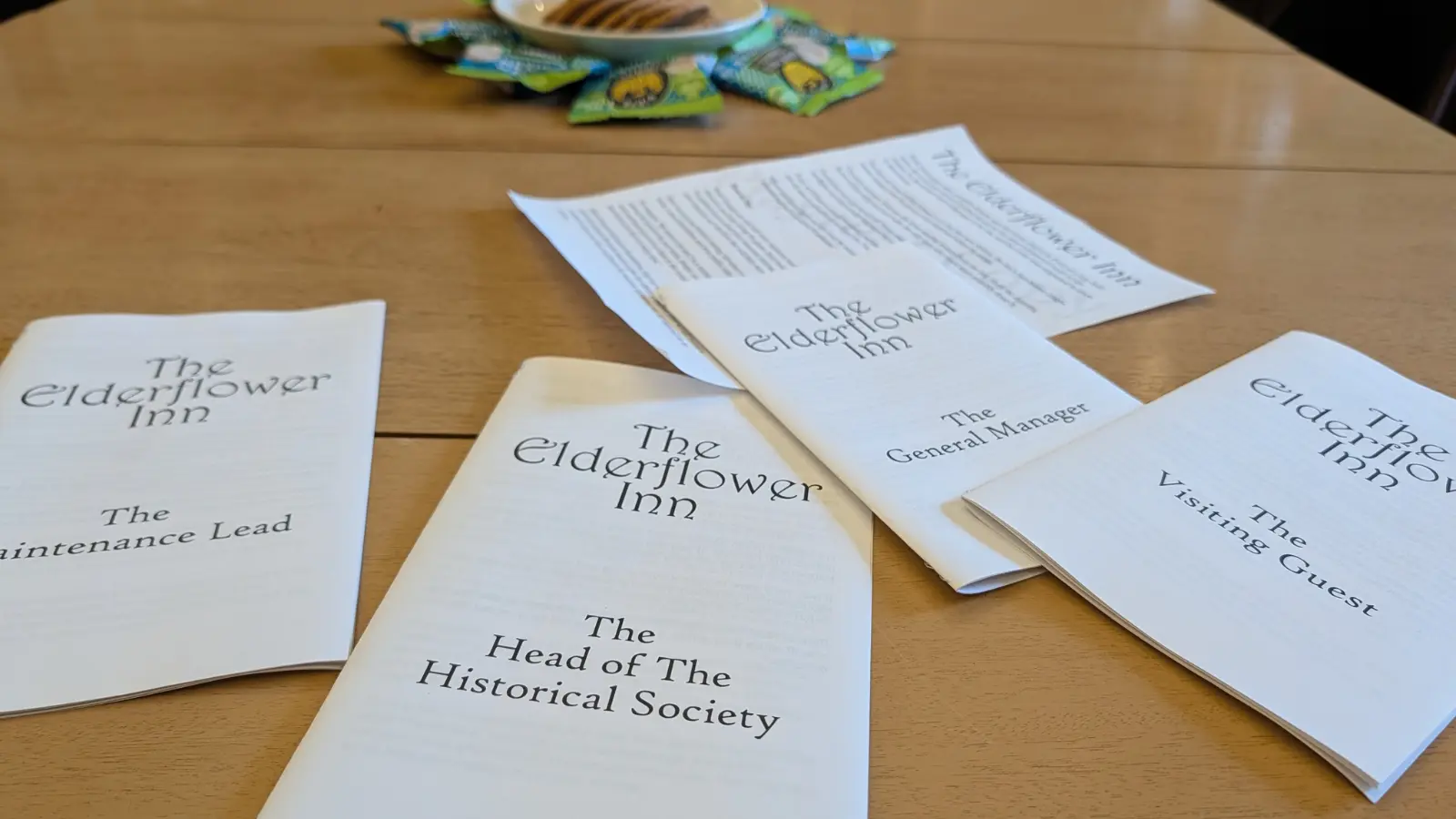
What Do You Do With The Character Booklet?
Most people keep their character booklets with them while they play. Unless you’re playing something with a long, large book, it’s helpful to keep your notes handy.
I’m also an obsessive notetaker, so (when it suits the character) I use my booklet to keep track of who I’m talking to and what’s happening.
What If a Player Doesn’t Play Their Character Right?
If a person isn’t reading their character booklet or diverges from their character’s written motivations, it impacts the story for everyone. The impact itself depends on whether that character is the culprit or if they’re just a suspect.
An unmotivated or unengaged player who plays the culprit could ruin the experience.
The solution here is simple. It’s something that holds true for pretty much any game night: If you think someone isn’t going to enjoy or engage with the game, don’t invite them. That’s good advice for TTRPGs, board games, LARPs, and just regular dinner parties.
What Do You Need to Memorize as a Player Character in a Murder Mystery?
It might sound daunting to pick up a character, but it shouldn’t be. You aren’t auditioning for the Circle Theater. It’s a game night with friends. To play, you just need to know the character’s motivation and what they’re hiding. A good murder mystery party game will tell you both of those things. Unless you’re playing a script-heavy game that relies on more details, you can make up pretty much anything else.
What Happens During a Murder Mystery Party?
Once you know your character’s motivations and secrets, you start talking to people. A good game will give you a strong enough motivation that you’ll have an idea of who you want to talk to right away.
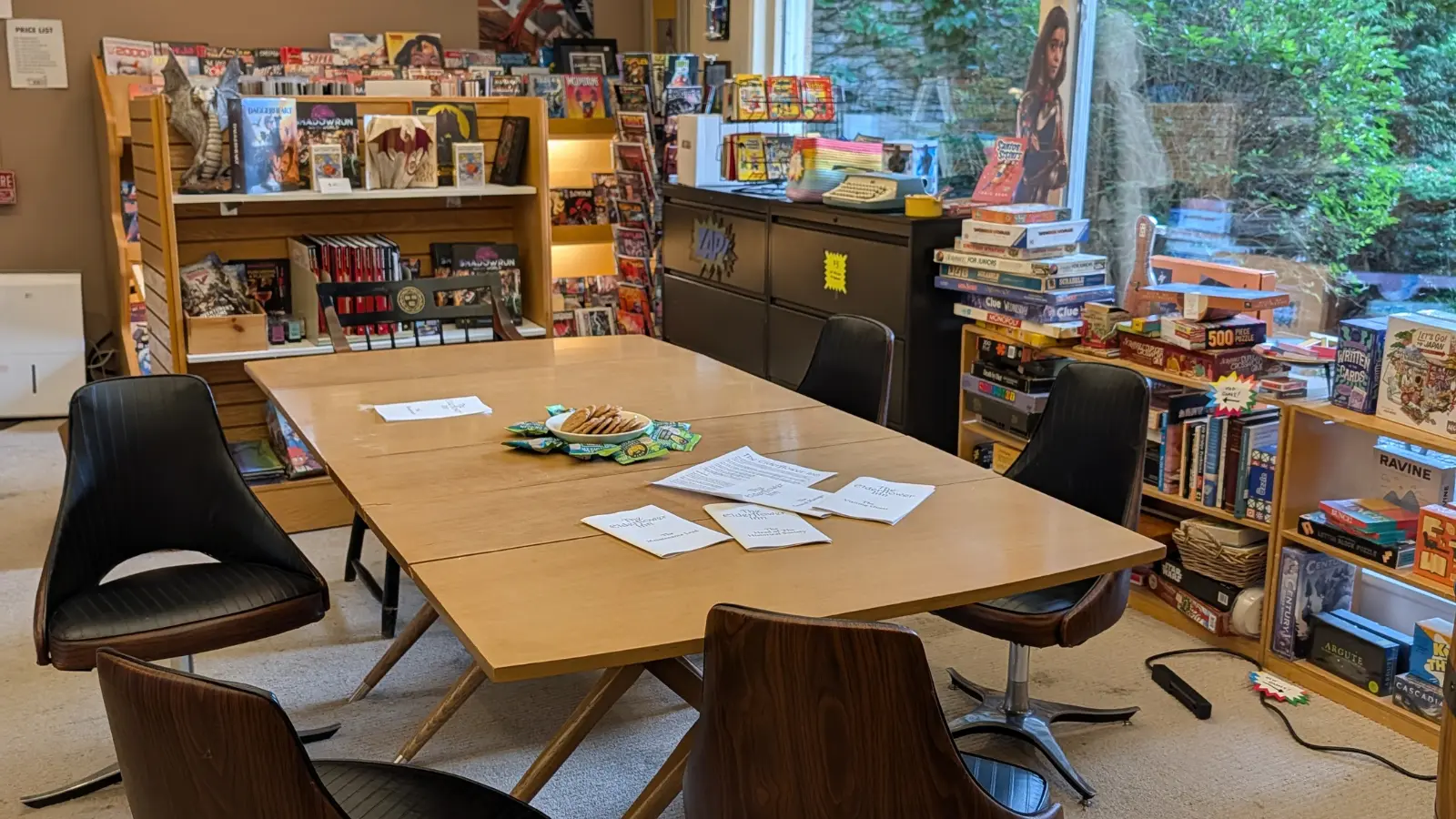
Then, it’s a party. Make small talk. Play up your character’s features. Lean into their faults. Learn everyone else’s secrets.
The specific game mechanics vary by game, but you’ll usually have basically three parts: Character introductions (when everyone finds out who they’re playing and introduces themselves to others), party interactions (where everyone asks each other questions and generally enjoys the party), and the resolution (where specific choices are made about who we think did the deed and the reveal on whether we’re right about that).
In The Elderflower Inn, the character introductions part takes about 20 minutes. That includes about 15 minutes of background reading and five minutes of player character introductions.
The party in that game takes about 90 minutes. That’s where people talk to each other, play as their characters, make wild accusations, and defend seemingly indefensible choices they’ve made.
How you learn other people’s secrets depends a bit on the type of murder mystery game you’re playing. Some boxed games have physical clues that are revealed during game play. Other games have specific mechanics like “Ask the mechanic where they were last night.” that get them to reveal a secret and ask someone else a specific question.
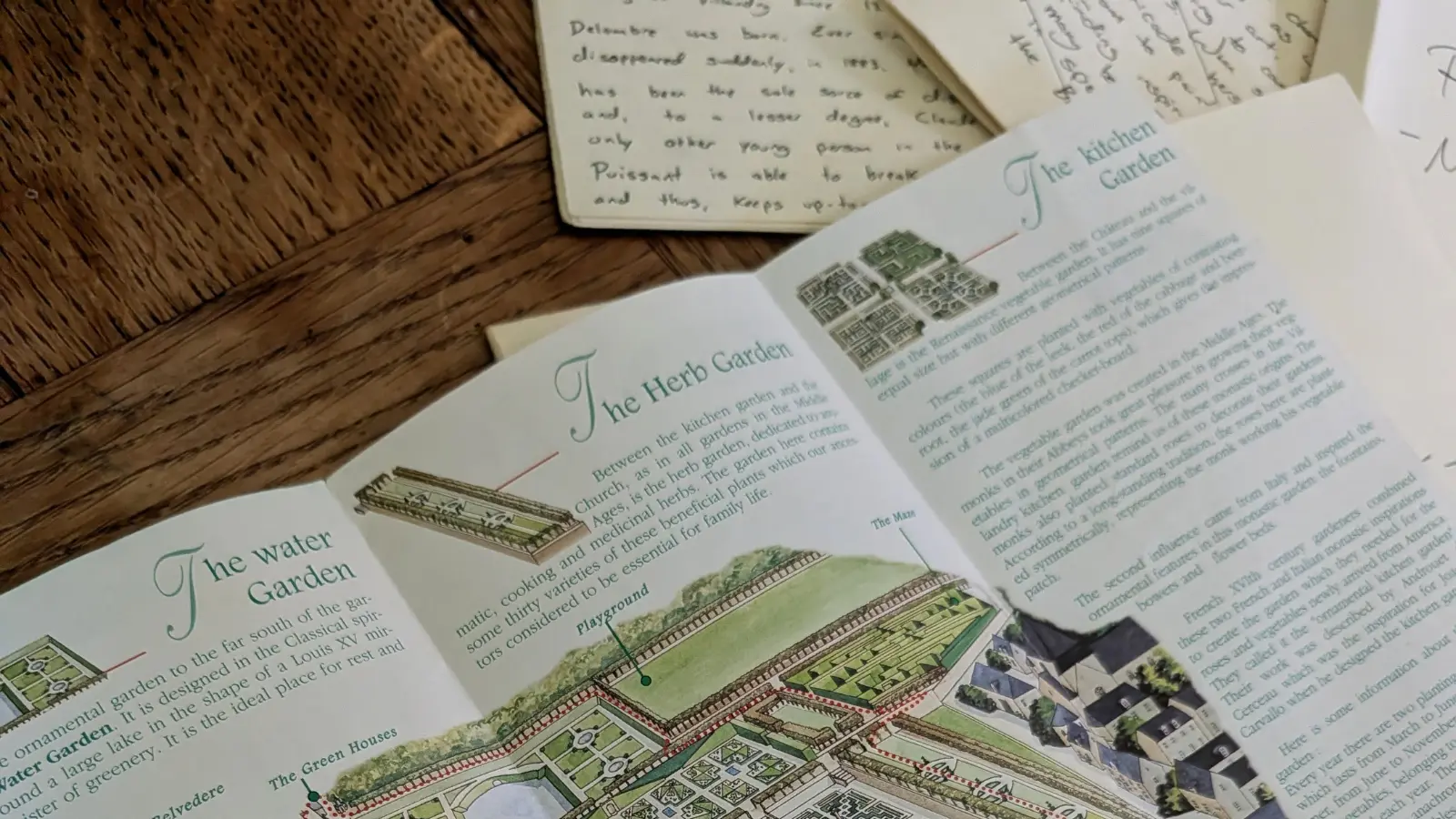
In almost all of these games, you’re just talking to people and asking questions. For games with more scripted interactions, players have to answer honestly. For games that lean more into roleplaying, like those I design, players are expected to lie in character.
The resolution for The Elderflower Inn, at least in my most recent playtest, lasted about 15 minutes. We voted on who to hand over to the sheriff, revealed the actual whodunit, and gave short character wrap-ups that told everyone what happened after the events of the night.
After that, the party sometimes continues with people just talking about the game.
Do I Need to Improvise?
I remember feeling some stage fright when I played a character at my first murder mystery party.
That didn’t last.
Understanding what I wanted as a character helped me know exactly what I wanted to do right from the start of the game. And understanding what my character wanted to hide allowed me to play cat-and-mouse with the other players.
Those two aspects helped me interact authentically as my character without needing to “act”.
When Does The Murder Happen at a Murder Mystery Party?
Most murder mystery parties have the actual crime happen “off screen”. That could be before the players arrive or it could be in another room or while the lights are off at or near the start of the game. This differs between games. I don’t have a preference on where or how this happens.
It’s the most- and least-important aspect of the game. The murder can set the theme and mood. It also isn’t nearly as interesting as the suspects involved.
The Solution to The Mystery
Scripted mysteries give you the answer eventually. So if you pick up a “say this/then reveal that” style of game, you’ll figure out who did it at the end. As with other parts of a murder mystery dinner party, the resolution depends on the style of game you’re playing.
For games like The Elderflower Inn, you’ll vote on who did it. The characters just live with the consequences. The real culprit will still be revealed in the end, but they have a chance to get away with it during the game. That’s a narrative choice as a game designer, and it’s one I prefer as a player (especially if I’m playing the guilty party).
What Should You Bring to a Murder Mystery Party?
When I go to a murder mystery party, I’m usually bringing food or drinks. That’s true for any type of event I host or attend with friends. My friends usually bring something too (snacks to share, a six pack for the fridge, or something homemade as a dessert).
When I’m feeling especially inspired, I’ll bring something that relates to the setting or characters of the mystery. I’ve brought rum to a pirate party, pretzels to game nights, and homemade vanilla whipped cream to a recent tabletop RPG.
I also usually expect the other players to lean into their characters. I expect them to improvise responses, including feeling scandalized when I accuse them of a crime. And with most of my players, I expect at least a little humor. There are dramatic murder mystery games. I just haven’t played them.
More from Autumnal Games
Frequently asked questions
What happens at a murder mystery party?
Most murder mystery parties have three parts. Character introductions, where everyone finds out who they are playing and introduces themselves. Party interactions, where everyone asks each other questions and enjoys the party. And the resolution, where the group makes choices about who did it and finds out whether they were right.
When do you get your character at a murder mystery party?
Characters are handed out before the event, either when you arrive or when you sign up to attend. Getting your character early gives you options for costumes. Handing them out at the door solves the problem of guests who flake or get sick.
Do you have to memorize anything for a murder mystery party?
No. You need to know your character's motivation and what they are hiding. A good murder mystery party game will tell you both. Unless you are playing a script-heavy game that relies on more details, you can make up pretty much anything else.
Do you need to be good at improv to play a murder mystery party game?
No. Knowing what your character wants tells you what to do from the start, and knowing what your character is hiding lets you play cat and mouse with the other players. Those two things let you interact authentically without needing to act.
How long does a murder mystery party take?
It depends on the game. In The Elderflower Inn, character introductions run about 20 minutes, the party runs about 90 minutes, and the resolution runs about 15 minutes. After that, the party sometimes continues with people just talking about the game.
How much prep does a guest have to do?
Most games start quickly. You get a character, establish some early goals, understand what you are hiding, and start interacting within ten minutes or so. Jubensha games, which translates to script murder, give players time to read short character backgrounds first.
When does the murder happen at a murder mystery party?
Most murder mystery parties have the crime happen off screen. That could be before the players arrive, or in another room, or while the lights are off at or near the start of the game. It differs between games.
Do you carry your character booklet around during the game?
Yes. Most people keep their character booklets with them while they play. Unless the game uses a long, large book, it is helpful to keep your notes handy and to track who you are talking to and what is happening.
What happens if someone does not play their character properly?
It impacts the story for everyone, and how much depends on whether that person is the culprit or just a suspect. An unmotivated player cast as the culprit could ruin the experience. The fix is the same as for any game night. If you think someone is not going to enjoy or engage with the game, do not invite them.
Can someone solve the mystery too early and ruin it?
Not really. A character shouting that they have solved it sounds like everyone else in the room. They are either trying to convince the group of what they believe, or they are the guilty party throwing suspicion elsewhere.

Jim makes games and events that invite people to embrace a shared fiction.