How to Write a Murder Mystery Party
Start with the setting. It’s the easiest part for the game designer and the most important part for the people who want to play, which makes it the right place to begin. Then write the culprit, then build the characters around them, and pick your structure last.
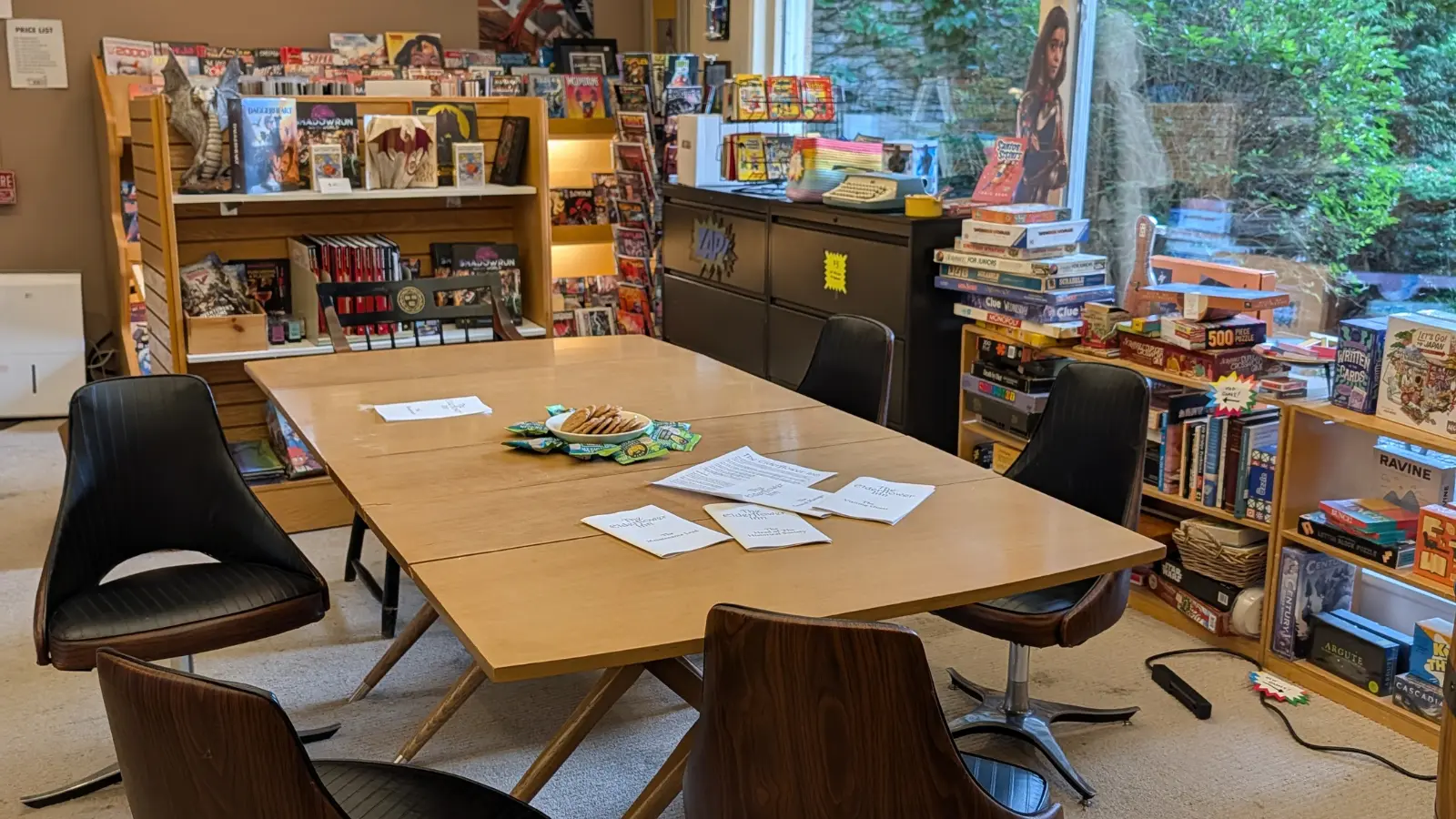
I’m doing this right now. The mystery is written and the first public playtest is next week at an independent bookstore in Highland Park, Illinois. What follows is the order I actually worked in.
| Start with | The setting, always |
|---|---|
| Write first | The culprit’s plot and motivation |
| Player count | Pick an exact number and write for it, then adapt |
| Clues | At least as many as you have players |
| Character sheets need | Secrets to hide, things to reveal, guidance on how to play, connections to others |
| Simplest structure | Rounds, with clues and reveals that trigger each other |
| Cost | Free, apart from paper and ink |
Start with the setting
The setting is the easiest part for the game designer and the most important part for the people who want to play. I’ve said this before about buying a murder mystery party kit, and it’s just as true when you’re writing one. It’s what gets people excited before they arrive.
I started by playing with the idea of a larp set in the world of a cozy holiday romance movie. That changed as I wrote. I landed on the setting of a cozy hotel in autumn, and the mystery would be a financial crime instead of a murder.
The crime doesn’t have to be a murder. Once the hotel was cozy, a body in the parlor was the wrong note, and a financial crime gave the players something to solve without making the evening grim.
Decide how many players you’re writing for
Pick an exact number and write for it.
With jubensha games, which are popular scripted larps in China, you need an exact number of players. In many old murder mystery boxed sets in the United States, the number of players varies based on how many people actually show up to the dinner party. Both approaches work, and they’re different jobs for the writer.
I’m testing my game with six players first. I want a specific number, but I’ll iterate for fewer or more players once I’m happy with how it plays for exactly six.
Write the culprit first
I wrote out the culprit’s plot and motivation first. Then I added more complex characters around the culprit.
You can’t distribute suspicion until you know what actually happened. I like logic games, so a spreadsheet worked well for figuring out who could have done it against who actually did do it. That’s the puzzle, right there. Plenty of people who could have, one who did.
Give everyone a clue, and give everyone a secret
Clues are important. Every character should be able to reveal something about the mystery, so you’ll need at least as many clues as you have players. Nobody should show up holding nothing.
In my favorite games, every player also has a secret of their own. Every character should help reveal some part of someone else’s secret, and every secret should have the possibility of being revealed by the end. That’s what keeps the table moving. If you’re the only one who can unlock what I’m hiding, we have a reason to talk.
A good murder mystery keeps everyone guessing all the way through the end. A great one never reveals all of its secrets.
Build the characters around the culprit
I fleshed out multiple drafts of the characters and adjusted clues and motivations as I went.
My favorite role-playing games use character connections and motivations as fundamentals. I didn’t want to do a big workshop at the start of the game, though workshops can be fun, so I built the character connections in as I wrote. Players arrive already knowing who they know and what they want from them.
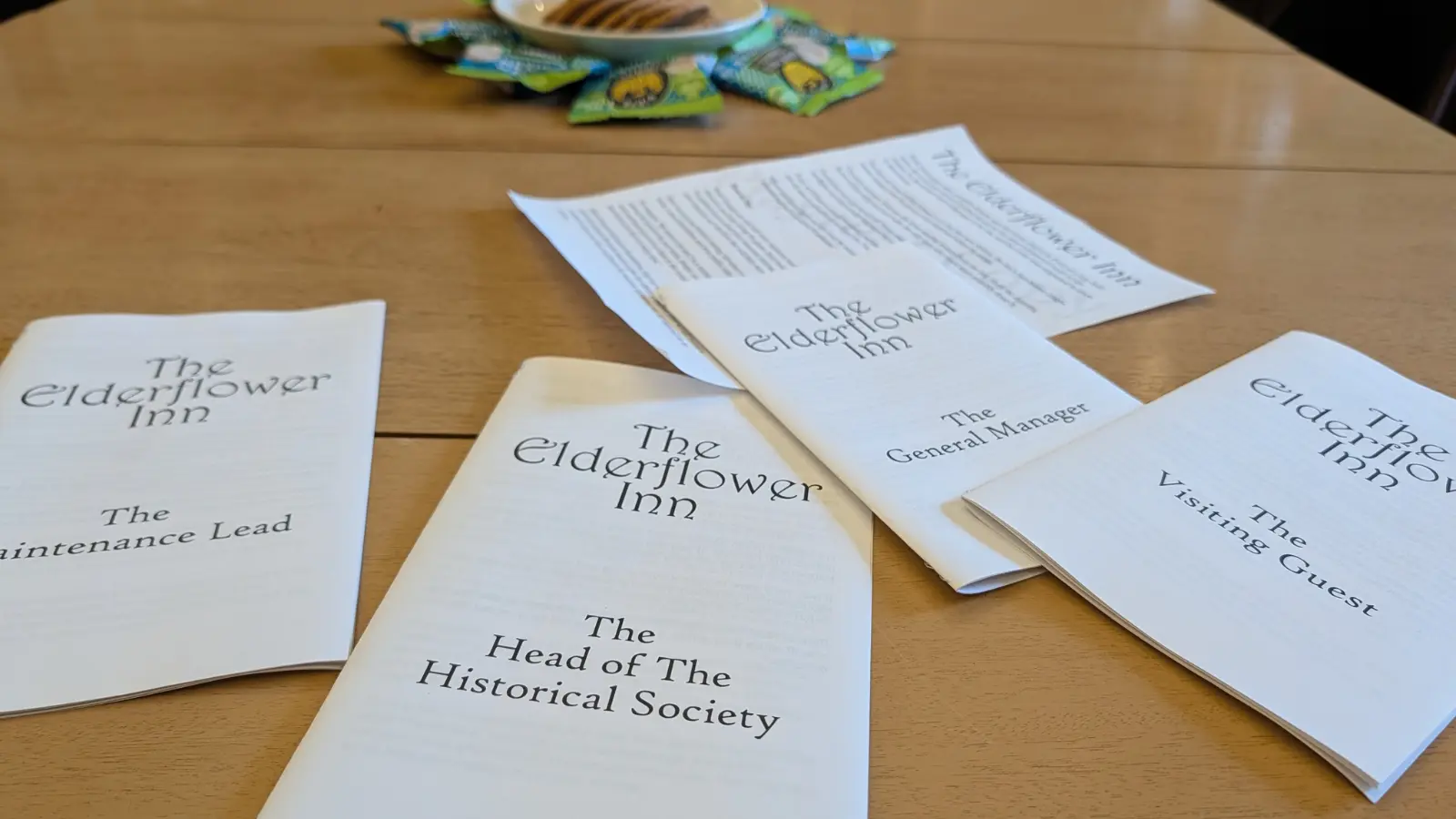
Every character got three things: secrets they wanted to hide, things they wanted to reveal, and guidance on how to play. The guidance matters more than it sounds like it should. It’s what catches the player who has never done this before.
Tell the killer they’re the killer
The killer should know they’re the killer.
If you expect players to invent any part of their character, this is vital information. You can’t play a guilty person convincingly if you don’t know you’re guilty, and you can’t decide what to hide if you don’t know what you did.
If you’re playing with people who all want to be surprised, that’s a different story, and you can keep it hidden. That’s the design behind a lot of the old boxed sets. But as a player I want to know if I’m the werewolf.
Pick your structure last
Structured murder mystery dinner parties sometimes have specific rounds where specific clues need to be shared before you can move to the next round. That’s effective. It’s just not what I wanted to do with this game.
If you’re building a murder mystery dinner party, the simplest option is to use rounds with clues and reveals that trigger each other. That’s what I did with my first murder mystery game back in college. It’s an easy structure to follow and it’s fun to play, too. If this is your first time writing one, that’s the structure I’d point you at.
My most recent game, which doesn’t have a title yet, is more freeform. My next playtest will tell me how effective that is.
Writing your own is the free option
If you came here looking for a free murder mystery party, this is it. Paper and ink, and the time you spend writing.
Buying a kit costs money and saves you the design work. Writing your own costs you the design work and saves you the money. Which side of that trade you want depends on whether you’d enjoy the writing, because you’ll be doing a lot of it.
The draft isn’t the game
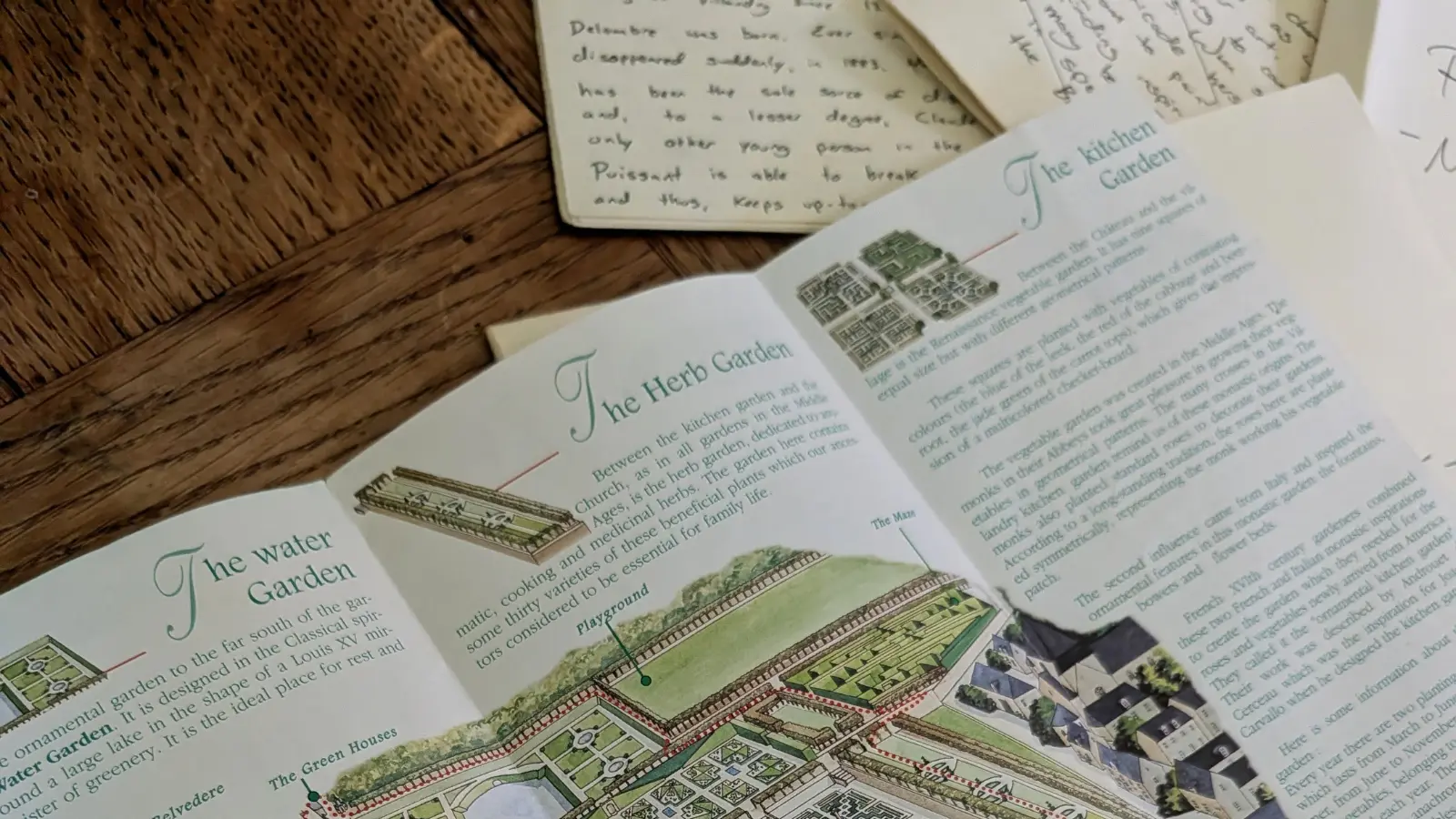
The game I’ve described here isn’t finished. It’s written, it’s about to meet six players in a bookstore, and some of it will break.
Write yours, run it, and then be honest with yourself about which parts worked. Mine has a cozy hotel, an autumn, a financial crime, and no title yet.
More from Autumnal Games
- The best murder mystery party kits for adults, if you’d rather buy than build.
- Crypt Kickers, a free committee larp, and a good way to see what parlor play feels like before you write your own.
- Fortunes: The Tarot Card Storytelling Game, a storytelling game for smaller, quieter nights.
- Browse all our games, or warm up with a free murder mystery puzzle.
Frequently asked questions
How do you write a murder mystery party?
Start with the setting, because it's the easiest part for the designer and the most important part for the players. Then decide how many people you're writing for. Then write the culprit's plot and motivation first, and build the other characters around that. Structure comes last.
Where do you start when writing a murder mystery?
The setting. It's what players get excited about before the party, and it's the part that's easiest to get right. Once the setting is chosen, the characters and the crime follow from it.
How many clues does a murder mystery need?
At least as many as you have players. Every character should be able to reveal something about the mystery, so nobody arrives holding nothing. In the best games every player also has a secret of their own, and every character helps reveal some part of someone else's secret.
Should the killer know they're the killer?
Yes, in almost every case. If you expect players to invent any part of their character, they need to know. The exception is a group where everyone wants to be surprised, in which case you can keep it hidden.
How many players should you write a murder mystery for?
Pick an exact number and write for it. Jubensha games, the scripted larps popular in China, require an exact count. Many old American boxed sets flex based on who shows up. Writing for a specific number first, then adapting for more or fewer players, is the easier path.
Should you write the killer first?
Yes. Write the culprit's plot and motivation first, then add more complex characters around the culprit. A spreadsheet helps for working out who could have done it against who actually did do it.
How do you structure a murder mystery party game?
The simplest option is rounds, with clues and reveals that trigger each other. It's an easy structure to follow and it's fun to play. Freeform play, with no round structure, is the other option, and it depends more on the players.
What should each character sheet include?
Secrets they want to hide, things they want to reveal, and guidance on how to play. Connections to the other characters and personal motivations are the fundamentals, because they give players reasons to talk to each other.
Does a murder mystery have to involve a murder?
No. The crime can be anything the players want to solve. A financial crime works, and it opens up settings that a murder would make grim.
Is writing your own murder mystery party cheaper than buying a kit?
It's free, apart from paper and ink. It also costs time. Buying a kit costs money and saves you the design work. Writing your own costs you the design work and saves you the money.

Jim makes games and events that invite people to embrace a shared fiction.