
What Is A Larp, Exactly? A Guide for Tabletop Players
One of my favorite parts about tabletop roleplaying games is strategizing, in character, with other players. We make secret deals, run side hustles, make inside jokes, and often develop memorable character voices we reference years later.
And that’s true for every group I’ve played with. I’ve played a crunchy DND game where my group spent six or more hours on a battle, moving minis around hexes while joking about casting magic missile at the darkness, and I’ve played a years-long story game where my main character was a forest spirit who never spoke a word.
It’s roleplaying that ties both of those groups together. My improv friends roleplay and my number-loving friends roleplay. The players I meet at one-shots at Gen Con roleplay, too.
That’s why I’m always surprised to hear, when someone mentions larp, a response like, “I could never try that.”
My first thought is almost always, “You’re already doing it!”
What Is a Larp?
When people talk about larping right now, there are two (very different) things they could be talking about. The traditional definition of larping is playing a character, usually at a live-action roleplaying (LARP) event. That’s the good kind. It’s fun.
Larping can also mean pretending to be something you’re not. That’s common parlance now, and it often applies to celebrities, politicians, and influencers. If someone wants you to believe they’re something other than what they are, you might say they’re larping.
| Boffer larp | Players use foam tools and weapons in war-like situations |
|---|---|
| Parlor larp | Played in a single place (or a single room) |
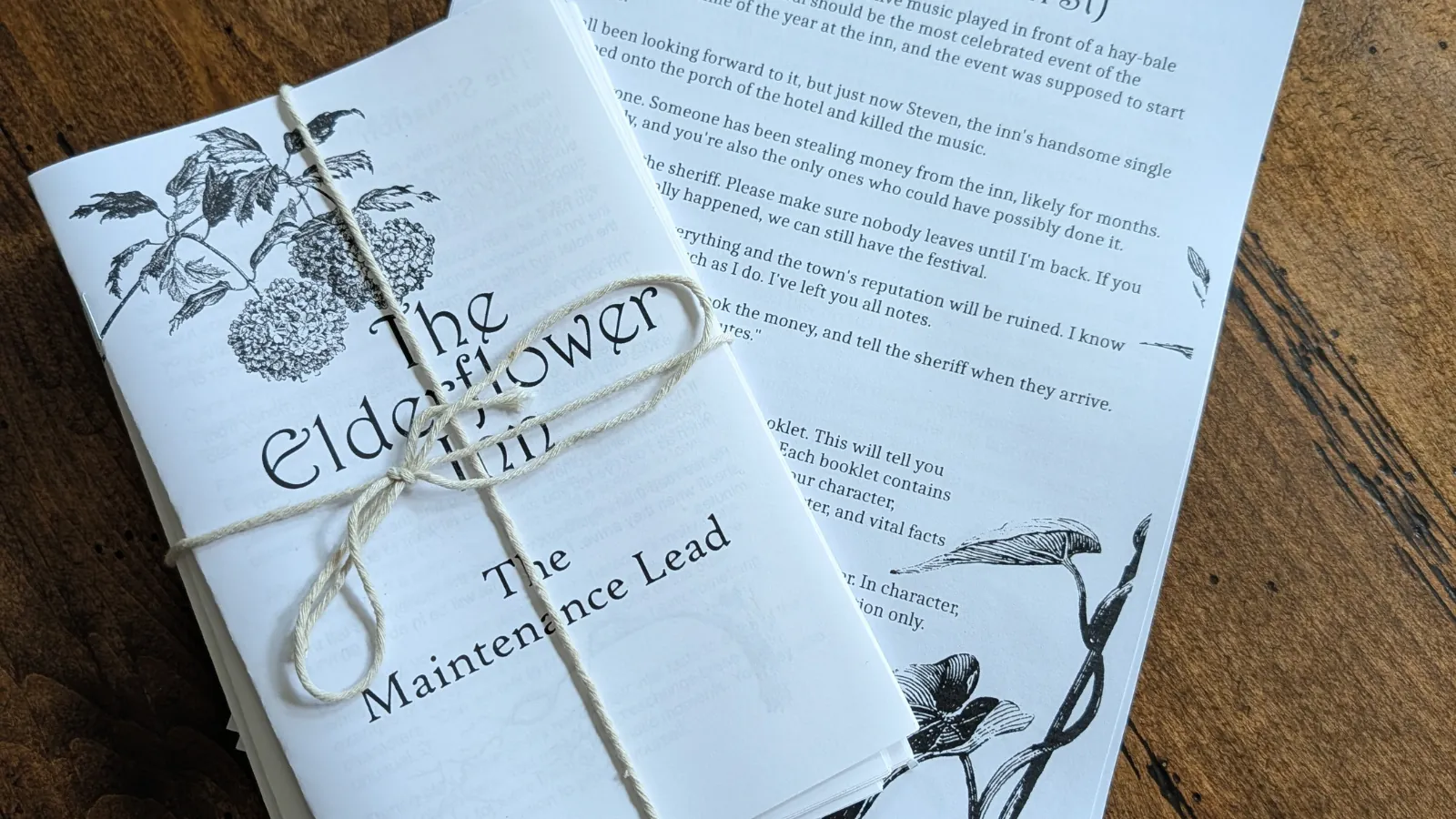
| Jubensha | Chinese mystery games: players read character booklets first and play out intricate stories as their characters |
| Nordic larp | Much less focused on crunchy rules and much more focused on story |
But even gamers tend to think of larping as an event that always involves foam swords being swung in a field.
That’s a misconception. I totally understand why people think of boffer larps (the kind where players use foam tools and weapons in war-like situations) when larps are mentioned. Those are huge and publicly visible.
There’s even a movie, Darkon, that shows the mechanics and culture of those types of games.
But there are so many more types of larp, and they might be more popular than boffer larps. They’re just less visible. Larps played in a single place (or a single room) are sometimes called parlor larps. They don’t usually happen in fields and the players don’t usually cover themselves in foam armor.
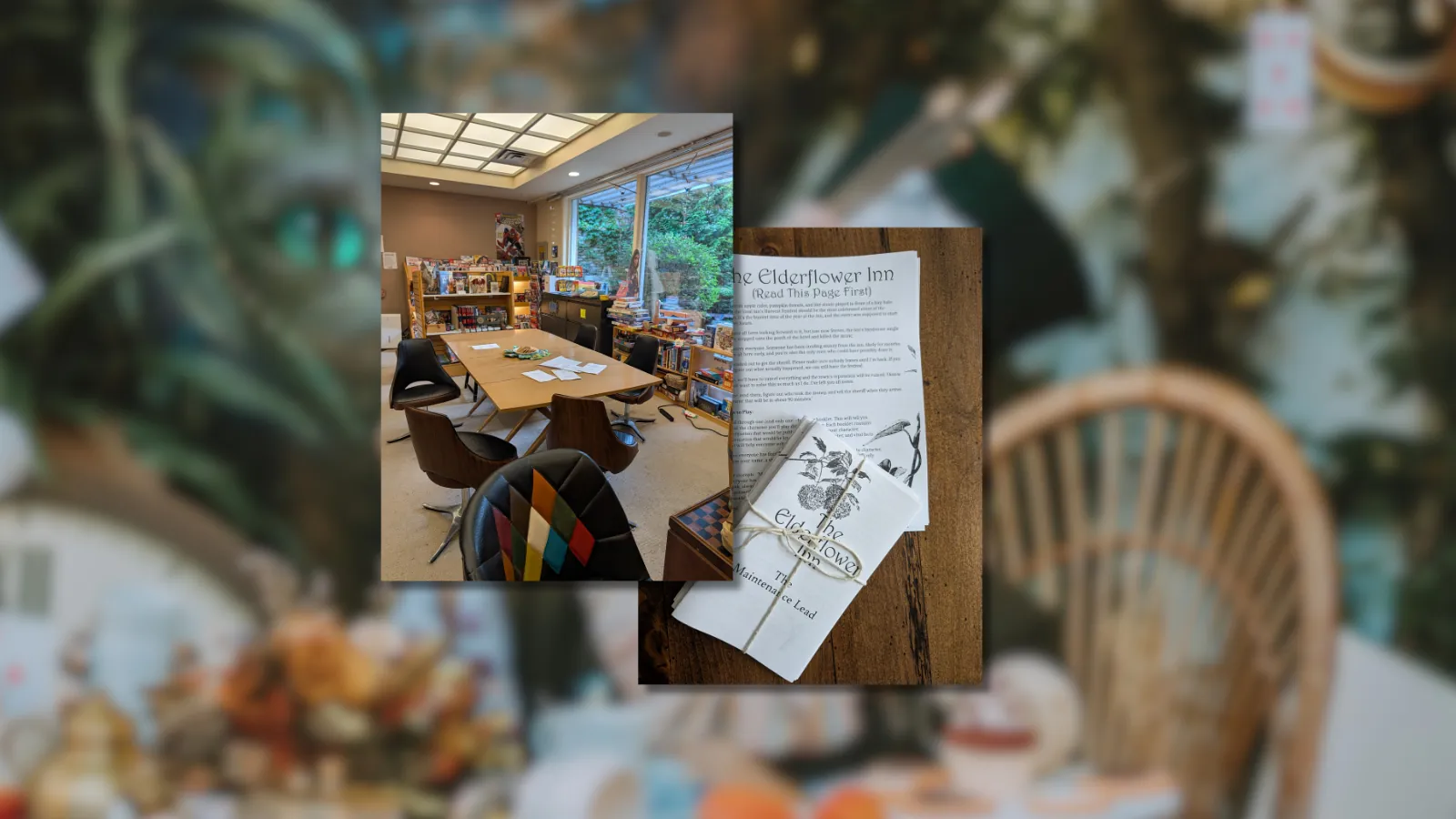
Chinese mystery games, called Jubensha, are another form of live-action roleplaying. Players read character booklets first and play out intricate stories as their characters. These sometimes involve romance, and they often include a puzzle or mystery to solve.
Nordic larps are diverse in size, setting, and theme. They’re much less focused on crunchy rules and much more focused on story. I’ve played Nordic larps where nobody fought anyone. The focus was on character-driven stories and a shared world with a specific atmosphere.
There’s overlap between some of these too. Some parlor larps are Nordic larps. Some Jubensha are parlor larps. All three could be narrative-driven larps.
Why Larp
I’ve hinted at this already, but there are a few major reasons more tabletop players should try larping. The first reason I mentioned: Most TTRPG players are already larping. They’re just doing it at the table. Here are two other considerations.
No Waiting to Play
The biggest advantage to larping (of any sort) over tabletop roleplaying is not having to wait to engage. So many games, especially those with five or more players, involve sitting around while a bunch of other players decide what their characters do on a map.
Don’t get me wrong, dice rolling is fun. It can, however, be a hindrance to play when every character action needs GM-approval before resolving.
In larps, the default is to stay in character. You can go out of character or excuse yourself at any point, and some actions, depending on the game, may require third-party approval. But that doesn’t usually stop the game for everyone else. Instead, characters continue to roleplay and their individual stories continue.
That means there’s less downtime, and it can also keep impatient players engaged through the whole session… which brings me to the next point.
Nobody’s Looking at Their Phones
Unless the larp is a game about looking at your phone, you’re unlikely to encounter a distracted player who prefers to look at their phone instead of engaging with the game. That’s my experience. I’ve played countless tabletop games and, especially at conventions, it’s common to see someone on their phone while they wait for their turn.
That’s not something I’ve ever seen at a parlor larp. Every player always has something they can do.
Join the Harvesters
Early access to new games, playtests, and exclusive events from Autumnal Games.
Where to Find Larps
There are plenty of places to find larps. Communities around me frequent the same game stores that sell tabletop games. They have discords, and they hold regular meetups. I also have a list of larp events within driving distance of Chicago that I’ve been keeping up for a while.
I ran The Elderflower Inn at Windycon 52 in October of 2026, and the game sold out. It could run with as few as six players, but we had 12 people show up for the maximum of 10 character slots. I loved watching this play out.
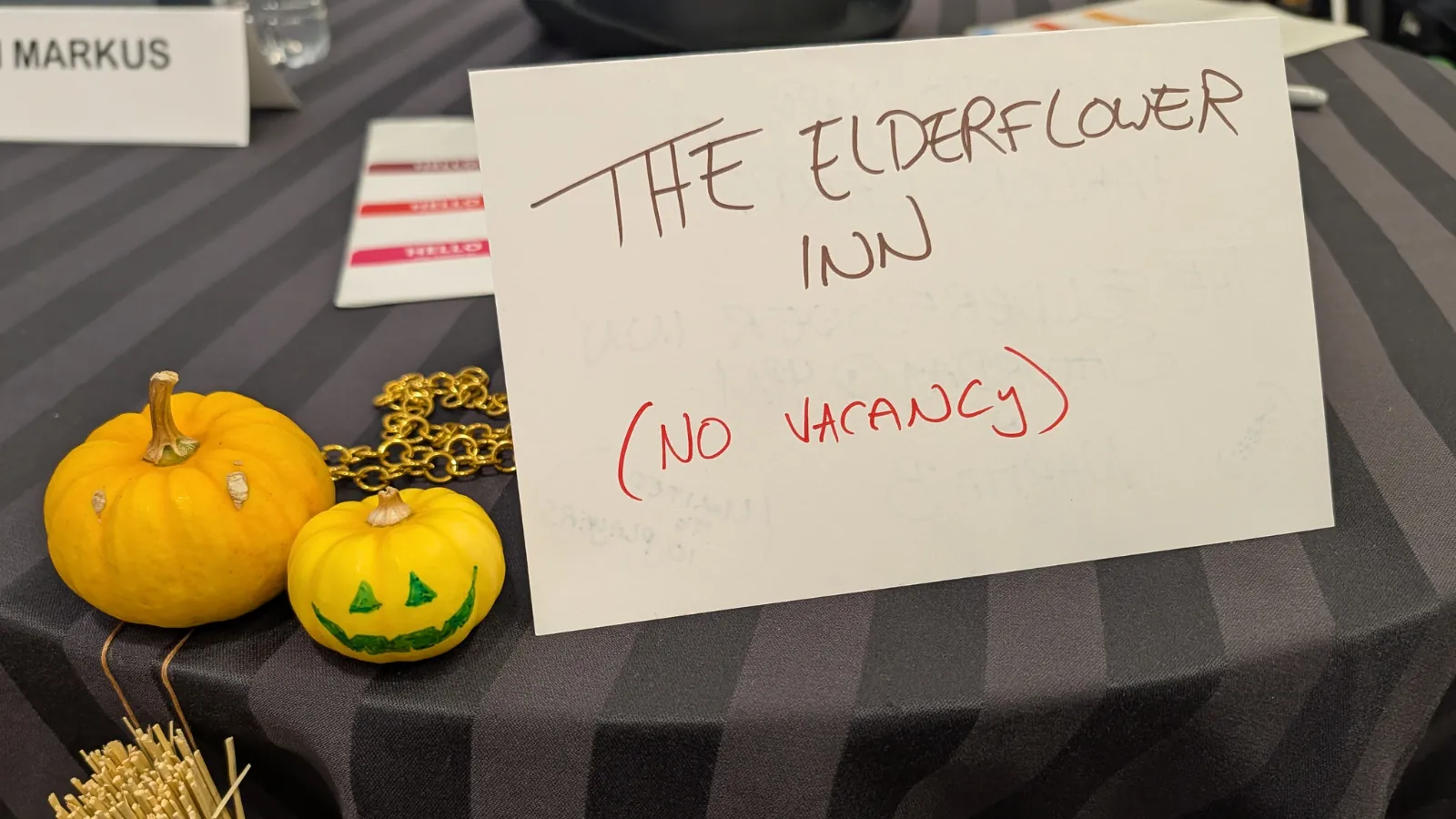
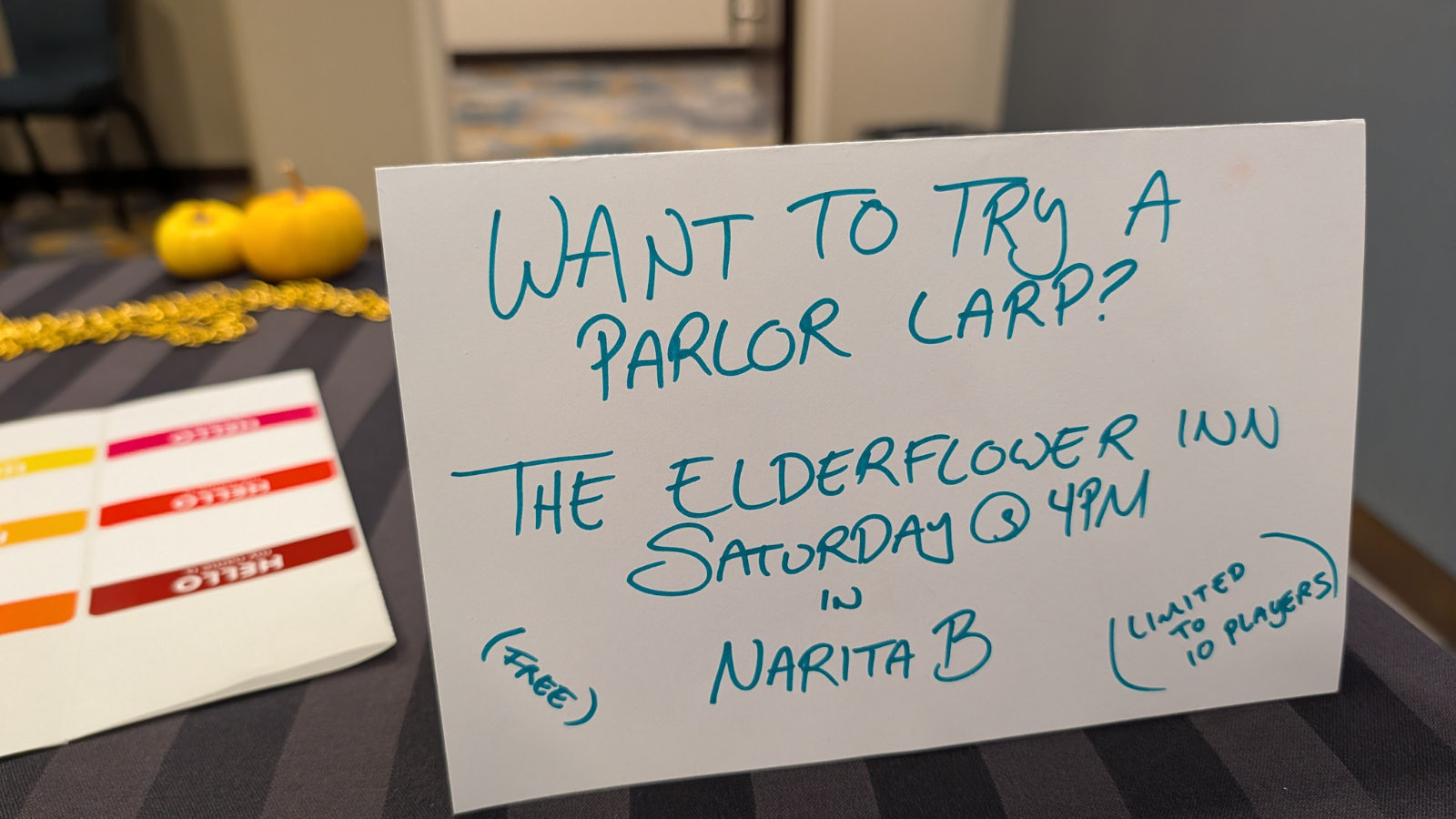
But my favorite way to find a larp is to host one. That’s why I like parlor larps so much. It’s easy to invite friends over for a one-shot, and we can be as costumed or casual as we want.
More from Autumnal Games
- Larp events: how to find one, what to expect, what it costs
- Larp events within driving distance of Chicago
- The Elderflower Inn, a cozy mystery parlor larp
- Crypt Kickers, a free parlor larp and a good first one
- Parlor games, from Snap Dragon to parlor larps
- Browse all our games
Frequently asked questions
Do you need a costume to larp?
You don't need a costume to larp, but costuming is very popular in the larping community. It's also expected at some larps. You'll want to check the specific event details to find out whether you'd be out of place in regular clothes.
How long does a larp last?
Larp lengths range from 30 minutes to multiple days. Parlor larps, like the kind made by Autumnal Games, usually last 2-4 hours. Some blockbuster larps run for several days and include lodging and meals.
How many people do you need for a larp?
You can run a larp with as few as five or six people. Parlor larps usually fall into this category. Larger larps, including those run at conventions, can sometimes have 40 or more people.

Jim makes games and events that invite people to embrace a shared fiction.