How to Plan a Murder Mystery Party (Games, Planning, Recs)
The best murder mystery parties start with your players, not your theme. Figure out who’s coming and what they enjoy, and every other decision gets easier.
The foundation of a great murder mystery party is knowing who your players are. This determines what kind of mystery you’ll host and how you’ll structure the experience. If you already know your players’ preferences, this part will be easy, but it’s worth thinking through regardless.
| Players | 5 to 9 for most boxed kits; 6 or more for a parlor LARP, with room for extra guests |
|---|---|
| Prep time | A weekend for a boxed kit, a few weeks if you’re writing your own |
| Run time | 2 to 4 hours, plus time for hellos before and debrief after |
| Cost | $0 to $20 shoestring, $20 to $50 for a professional kit, $50 and up per person for a live event |
| Best for | Dinner parties, birthdays, holidays, and any group that wants a night with a story |
| Hardest part | Getting a specific number of people in one place on one date |
Start With Your Audience
For actors and improvisers: You can go very rules light. These players will make their own fun. What they need is a clear setting, clear characters, and a motif that excites them. Give each person a goal if you can. You’ll still need to establish who the suspects are, who the actual killer is, and what clues exist along the way, but with this group, you have the least work to do.
For people with no murder mystery or improv experience: A boxed set is your best friend. These come ready-made with character sheets that tell players what they care about, their relationships, and what drives them. You don’t need any experience to run one. Arsenic and Lies is a favorite. It’s card-based, takes about three hours, and all you need is the deck itself. This lets you focus on theme and party planning instead of game design.
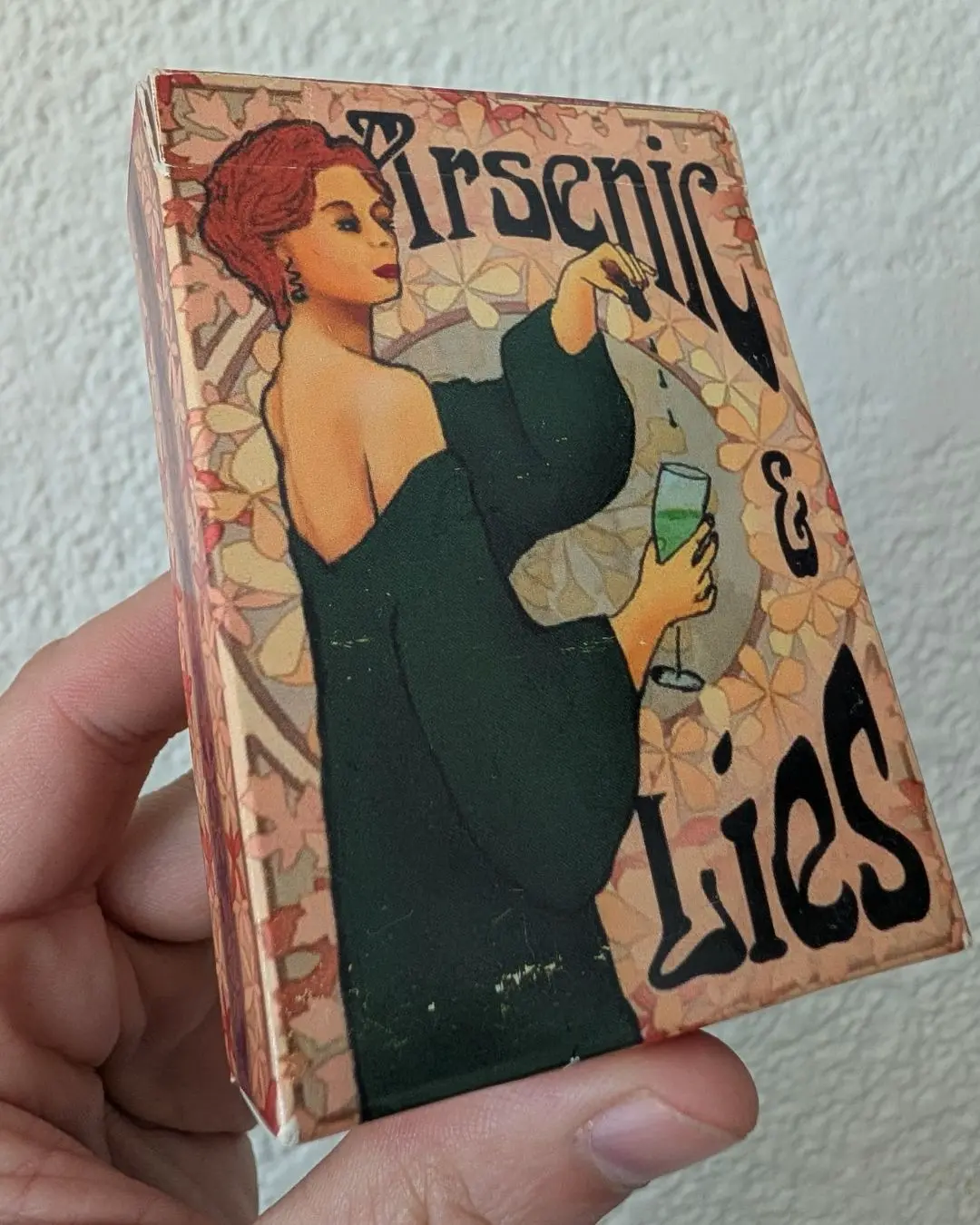
For tabletop role players (D&D, Monster of the Week, Wanderhome players): You’re somewhere in the middle. Boxed murder mystery kits built in the eighties and nineties work well for this group because they give you structure with character secrets that unlock at specific moments. But what really engages TTRPG players is the chance to build characters themselves. Look for a kit that lets players establish relationships and goals while you seed in motivations and secrets. That ownership is key for this demographic. If you want to lean fully into the tabletop side with less of the LARP element, games like Brindlewood Bay and Monster of the Week are strong alternatives worth a look. Or, and this is my favorite, make your own murder mystery game.
How Many People You Need
Most boxed murder mystery kits require a minimum number of players, often five to nine. The catch is that you’ll never know exactly how many people will show up.
The core players are essential. The murderer, the primary suspects, and the key characters all have to be there for the story to work. The extra characters (usually slots six through nine) add value but aren’t critical. If they don’t show, the game still runs.
A practical approach: If you can avoid it, don’t assign characters beforehand. Hand them out when people arrive. This way, you can make sure your vital players (one through five) are accounted for before you assign the dispensable ones. If someone doesn’t show up, you’ve already protected the game.
On whether you play or host: You have two good options. You can be a player character and experience the game, though you might uncover the killer early if you read the instructions ahead of time. Or you can be the host only, maybe even the victim who gets killed early and then moves around as a ghost or non-player character, helping move the story along and keeping energy up. Both work fine.
When you have more guests than players: This is common at professional murder mystery dinners. Not everyone needs a premade character. If you’re running a parlor LARP that needs six players but you’re expecting ten or fifteen people, those six are locked in. Everyone else can still be part of the evening. They can question player characters, try to solve the mystery themselves, even make up observer characters that fit the theme. A restaurant murder mystery twenty years ago in Lakeview, Chicago did this well. People paid to attend, ate dinner, and could participate in questioning the characters even if they weren’t player characters themselves.
Theme as Your Planning Foundation
If you’re using a premade kit, the theme is already chosen for you: Wild West, nineteen twenties, vampire, Wuthering Heights, Renaissance, medieval, futuristic. Whatever it is, the theme shapes everything that follows.
Theme affects your menu. It affects your music. It affects your decorations, your venue choice, and whether you’re hosting indoors or outdoors. A prohibition-era murder mystery feels completely different than one set on a starship or in an alien world. (I own a Star Trek murder mystery box set. It exists, and yes, it feels totally different than the others, and that’s part of the fun.)
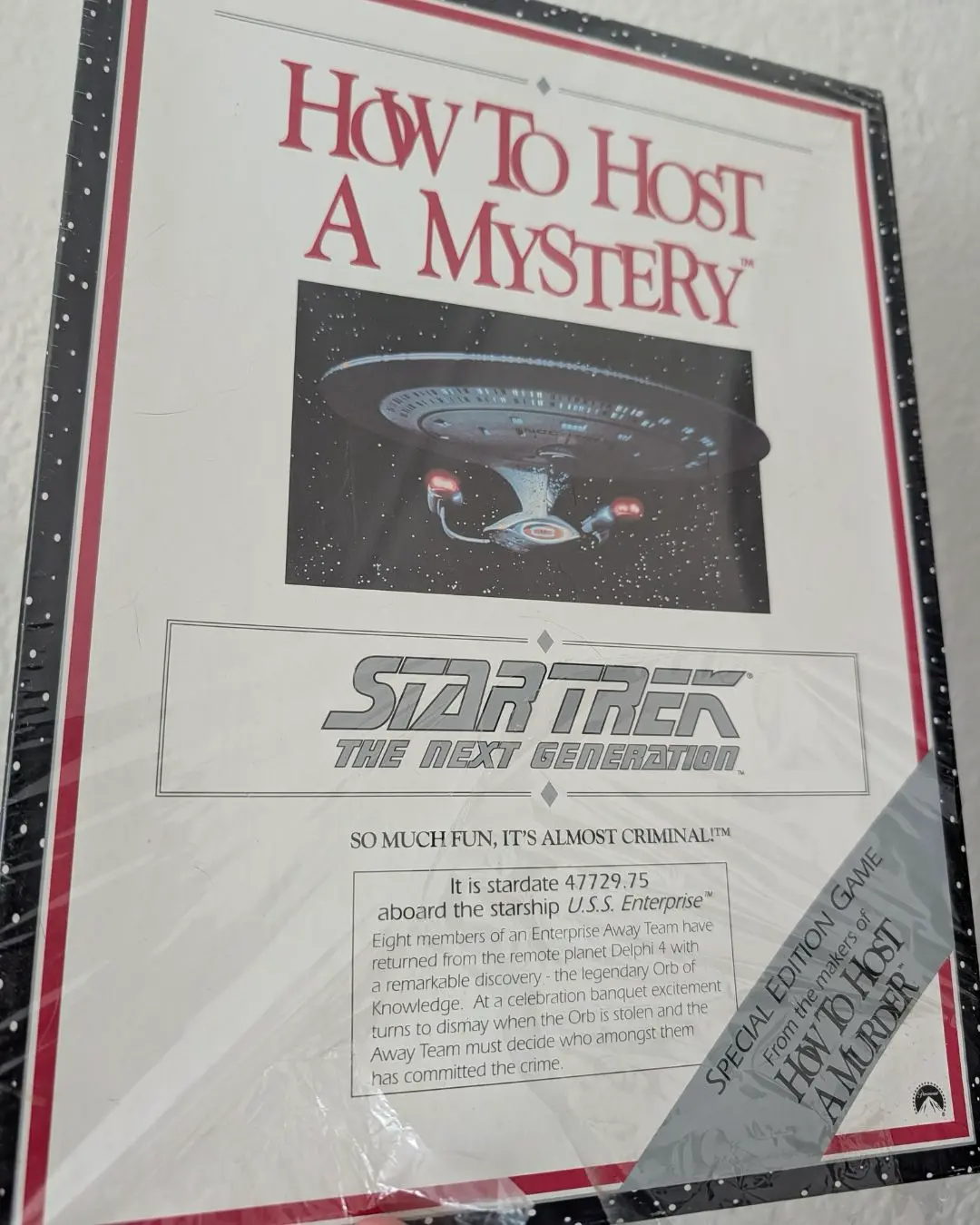
When you’re working with a LARP, the theme does the same work. It gets people excited before the event even starts.
Where to Find a Murder Mystery Game
Once you know your theme and player count, you need the game itself. Where you shop depends mostly on your budget.
For a shoestring budget ($0 to $20), you have more options than people expect, and this is my specialty. I hosted a podcast called Frugal Living for a reason. Look on eBay for the older boxed sets from the eighties and nineties, which show up cheap and still play well. Estate sales are a quiet goldmine for the same reason. For small indie games, itch.io has a deep catalog of digital murder mysteries and parlor games you can print at home, often from the designers themselves. And if you have the time, you can write your own for the cost of paper and ink.
For a mid-range budget ($20 to $50), it’s worth buying a professionally designed murder mystery kit. I’ve tried many of them. Aside from the games we make at Autumnal Games, my two favorites over the past decade have been the Mysterious Package Company, which makes premium mail-delivered mystery and murder mystery games with real physical artifacts, and Hunt A Killer, which built its name on episodic, evidence-driven boxed mysteries you work through case by case. Both do the design work for you and hand you a finished experience.
For $50 and up per person, a live event is done for you. You show up, play, and eat. There are options in Chicago and most major cities worth checking out. I’m not affiliated with any of these, though I’ve been in the audience for similar theater groups over the years:
- The Murder Mystery Company runs public and private mystery dinners in the Chicago area.
- New York Dinner Theater stages interactive murder mystery dinners in New York.
- Mysteriously Yours runs regular dinner-and-show mysteries in Toronto.
How Much a Murder Mystery Party Costs
You can host a murder mystery party for almost nothing or treat it like a wedding. The three tiers above map cleanly to how much you want to spend.
The shoestring version runs $0 to $20 total. A secondhand kit, a printed indie game, or one you wrote yourself, plus whatever you were already going to spend on food and drinks. Most of the value in a murder mystery party comes from the people in the room, so a cheap game with the right friends beats an expensive one with the wrong crowd.
The mid-range version runs $20 to $50 for the game, plus your food and decorations. This is the sweet spot for most hosts. A professional kit removes the design work and still leaves the party planning, which is probably the part you wanted to do anyway.
The premium version runs $50 and up per person for a live event, where a professional cast, a venue, and a meal are all handled. You trade money for zero prep. Autumnal Games sits in the mid-range tier, one option among the professional kits, for hosts who want a designed experience they run themselves.
How to Plan a Murder Mystery Party for a Small Group of Friends
Start by knowing who you’re inviting. If it’s a tight group of four or six people who are all comfortable with each other, you’re essentially throwing a themed party where everyone plays a game together. That’s it.
- Know your friends and ask what they want. If you’re open to different themes, ask them what excites them: aliens, ghosts, fairies, a specific historical era. If you know them well enough, you can choose for them. Either way, you’re picking a theme.
- Find a murder mystery kit that fits. There are plenty out there. Quality varies, but if you’re flexible on that front, you should find something. (You can also make one yourself, but that’s a different article.)
- Verify your player count. Does your game work with everyone you’re inviting? If not, can it run with fewer people? If your friend John always bails at the last minute, and I speak from experience, you need a game that works without him. If he shows up, great. If he doesn’t, the night still runs.
- Schedule. Find a date when everyone can actually be there. This is probably the least fun part of hosting anything, but it’s essential.
- Handle food and venue. Decide if this is a meal, snacks, drinks, or nothing. Are you providing it, or is it a potluck? If you’re at a restaurant, call ahead to confirm they’re okay with your group, get pricing, and understand how long you can stay.
- Plan timing. Know how long the game runs. Budget time for introductions before and conversation after. The post-game breakdown matters as much as the game itself. People want to talk about what they experienced, what they figured out, where they were wrong, and what surprised them. Don’t skip that.
- Decide on costumes and decorations. Know your friends. Are they the type who loves dressing up? Do they prefer to stay casual? Tell them ahead of time what you’re expecting. Decorations come from your theme, and your budget is up to you. You can go lavish or keep it simple. A lot of the joy comes from the characters themselves, your friends, so fancy decorations matter less than good people and a working game.
- Send themed invitations. This is often overlooked, but it’s powerful. A themed invitation gets people excited, sets expectations about costumes and food, and signals what the party is actually about. If you want to go further, send a physical invitation. Coded letters, sealed with wax, encrypted puzzles, these are free or nearly free, and they elevate the whole experience. During the pandemic, my friends and I started doing this with each other because we enjoy cryptography and surprises. It’s a small gesture that lands hard.
Communication Before and During the Event
This part is key, and most hosts skip it.
Before the event, understand what your players are excited about and what they’re not. This can be a lines and veils conversation. It can be a hand motion. Many games include these communication tips already. If you choose a game that doesn’t, one good go-to option is to familiarize your players with the idea that if they’re uncomfortable with any scene or topic, including in the middle of a conversation, they can leave the room at any time.
If a player makes an X with their arms in front of their chest, that’s a visual cue for other players to step back from the current topic and avoid it going forward. These are safety cues, and they’re valuable. They’re very common at conventions and with groups of players who don’t all know each other, and they’re also common among groups of friends approaching games and topics they haven’t done together before.
For the host, keep an eye on players who might be unwilling wallflowers. If someone seems like they’re itching to share a secret, give them the opportunity. Many games already lay out mechanics to pull secrets out of everyone. But if you’re playing a loose game that doesn’t give act-by-act instructions on what to say when, a good murder mystery dinner party host watches for the moments to let people shine.
How to Plan a Murder Mystery Party for Larger Groups and Strangers
Everything from the small-group list still applies, but you need to add one crucial step: send out a questionnaire.
Use a Google Form with specific dropdown options. Ask people:
- Do you want to play a main character?
- Do you want to be an NPC?
- Do you want to observe and not participate as a character?
- Do you not want to come?
All of these are valid answers. But you need to know before they show up, because you can make the night exceptional for any of them.
If someone wants a main character, give them one of the core roles. They want to be at the center of the story.
If someone wants to be an NPC, they don’t necessarily need a premade character sheet. They can come up with their own character that fits the theme, or you can create one for them. Their role is more observation-based. Maybe they’re a journalist, a spy, someone gathering secrets, someone who influences the story from the sidelines. The gift you’re giving them is permission to sidle up to engaged players and experience the drama without having to drive it themselves.
I learned this from a friend, Charlie, who illustrated Fortunes with me. We were playing in a LARP together, and our GM gave him the role of secret agent. His job was to move quietly through the game, listen to everyone’s secrets, and gather information. He didn’t want all the engagement of politics and direct drama. He wanted to know all the stories happening around him. That role let him do exactly what he wanted without the anxiety that sometimes comes with these games. You can give that same gift in a murder mystery.
For bigger LARPs or larger parties with non-player guests, you can run workshops before the game starts. If you’re running a game for twenty or thirty people, you don’t need everything scripted. You give people their character outlines, then spend the first hour or two in a workshop where people build relationships within their character subsets.
Example: a nobility murder mystery with knights, a queen, and townspeople. The knights spend fifteen to twenty minutes developing relationships with each other: cultural traditions, who’s most powerful, who’s least respected. Then they spend ten or fifteen minutes with the queen establishing that dynamic. Then the game begins. Unless you’re building this yourself, a quality game will include all these mechanics.
On revealing the killer: a quick note on philosophy. In a lot of old boxed murder mysteries, the killer doesn’t know they’re the killer until round three or four or five. They play innocent because they genuinely don’t know. This can work, but it has a flaw. It’s hard to read a guilty person if they don’t know they’re guilty. You can’t read their expressions or presentation because they’re not actually hiding anything. More subtle games, where the killer knows and has to convince people they’re innocent, create better tension. The best systems give the killer knowledge and let them play with that.
For non-player observers, you can invite them to vote on who they think the murderer is. Give them a deadline. Let them question player characters. Let them develop their own solution. They still get to play detective without being a character themselves.
Mechanics Are Game-Specific
Here’s the good news: if you’re buying a murder mystery from any game developer worth their salt, all the mechanics are included. Clue placement, red herrings, reveals, and pacing are all in the rules. You read the instructions, and the game tells you what to do.
Alternatives Worth Knowing
Not every mystery night has to be a traditional murder mystery kit. Social deduction games like Werewolf, Mafia, and Inhuman Conditions can be great alternatives, especially for groups that want the tension of figuring out who’s lying without a full scripted setup. Inhuman Conditions is a two-player game where one person interviews the other to determine whether they’re a robot, a little like the Voight-Kampff test in Blade Runner. It’s a different flavor of deduction, and it’s worth a mention if your group wants variety.
If you want a free option built around that same kind of group negotiation, our own Crypt Kickers is a committee LARP you can run online in an evening. It’s a good first game for a group that has never played.
Hand-Holding Versus Ownership
Once you’ve hosted a few of these, you start to develop opinions about what makes a murder mystery good. Here’s mine.
The old boxed sets from thirty or forty years ago are very hand-holdy. They tell you exactly what your character says each round, when to move to the next round, who to ask what, and who the murderer is at the end. That can work fine. But it’s not the most fun, and I say this from years of experience.
The games I get most excited about, the ones my friends and I actually love, are ones where you feel ownership of your character. Where the killer knows they’re the killer. Where there’s room for subtle play instead of strict hand-holding. That ownership changes everything.
But here’s the thing: that approach only works if your players have the experience or comfort level for it. If they don’t, guardrails are better than subtlety. Tell them what their character cares about, who they should talk to, and who they might have a grudge against. Build those connections for them. Players who otherwise might feel lost will know exactly who to approach and why.
That’s my philosophy in game design. Subtlety and ownership work beautifully for actors and improvisers. Guardrails and clarity work beautifully for everyone else.
More from Autumnal Games
- The complete guide to murder mystery party kits, for choosing the right game for your specific group.
- Crypt Kickers, our free committee LARP, and a good first game for beginners.
- Fortunes: The Tarot Card Storytelling Game, a storytelling game for smaller, quieter nights.
- Browse all our games, or warm up with a free murder mystery puzzle.
Frequently asked questions
How many people do you need for a murder mystery party?
Most boxed kits need five to nine players, with a smaller core of essential characters (the murderer and primary suspects) that must be present. Extra roles can be filled or left out depending on who shows up. Parlor LARPs often have a fixed core count, such as six, with room for additional guests as observers or NPCs.
Can you host a murder mystery party with no acting experience?
Yes. A boxed set does the heavy lifting by handing each player a character sheet with their relationships, motivations, and secrets. Games like Arsenic and Lies require no improv background. As the host, you can focus on theme and party planning instead of game design.
Should the host play a character or just run the game?
Both work. Playing a character lets you experience the game, though reading the instructions ahead of time may spoil the killer for you. Hosting only, or playing the victim who becomes a ghost or NPC, lets you keep the energy up and move the story along without metagaming.
How do you run a murder mystery party for a large group or strangers?
Send a questionnaire first. A simple Google Form asking whether each person wants to play a main character, be an NPC, observe, or skip the event lets you assign roles that fit. For very large groups, run relationship-building workshops in the first hour before the main game begins.
What if someone does not want to be in character?
Give them an observer or detective role. They can question player characters, gather clues, and vote on the culprit without a scripted part. Knowing this ahead of time, through your questionnaire, lets you make the night comfortable for them.
What are safety cues in a murder mystery game?
Safety cues are agreed signals that let players step back from an uncomfortable topic. Lines and veils set boundaries before play, and an in-game gesture, such as crossing your arms in an X, signals others to move away from a subject. Players can also leave the room at any time.
What is a good theme for a murder mystery party?
Popular themes include the 1920s, prohibition, Wild West, Renaissance, medieval nobility, vampire, and futuristic or sci-fi settings. Pick the theme first, because it drives your menu, music, decorations, and costumes. Match the theme to what your specific guests are excited about.
What are the best games for a murder mystery night?
Boxed kits like Arsenic and Lies suit beginners. Social deduction games like Werewolf, Mafia, and Inhuman Conditions work when you want tension without a scripted setup. For a tabletop group, Brindlewood Bay and Monster of the Week offer mystery play with less of the LARP element.
How much does a murder mystery party cost?
You can host one for $0 to $20 with a secondhand or homemade game, $20 to $50 for a professional kit, or $50 and up per person for a live event where the cast, venue, and meal are handled for you. Most of the value comes from the people in the room, so a cheap game with the right group beats an expensive one with the wrong crowd.
Where can you buy a murder mystery party game?
For cheap or free options, try eBay, estate sales, or itch.io for indie digital games. For a professional kit, companies like the Mysterious Package Company and Hunt A Killer deliver finished experiences by mail. For a fully hosted night, live dinner-theater companies operate in Chicago, New York, Toronto, and most major cities.

Jim makes games and events that invite people to embrace a shared fiction.