Why I Use Artifacts in Games
I played Fall of Magic with the same group of friends for something like four years. Some people play it as a single one-shot, and that surprised me, because we had dozens of characters we’d created and spreadsheets to keep track of the characters and plot lines. One of my friends started recording sessions on her phone and still goes back to listen to them. It’s like a personalized actual play podcast, a way to go back in time and live with your friends in some of those moments again. It’s still one of my favorite games, and I look back on it fondly.
I’d already played Dread before that, which uses a tumbling blocks tower, like a Jenga tower. What connects those two games is the artifact.
| What it is | A game with a tangible, on-theme object built into play |
|---|---|
| Also called | Object games, RPGs with physical components |
| Clear examples | Dread, Fall of Magic, Ten Candles, Fortunes |
| The artifact does | Emotional or structural work the rules alone can’t |
| Not this | Games where players bolt their own artifacts on, like D&D |
What an artifact game is
An artifact game is a game that includes something tangible and on-theme that players interact with as part of the game. The artifact enhances the overall experience for the players, and when it’s done right, it can do a lot of work with very few words.
I tend to keep that definition pretty broad because so many of these games look totally different.
Fall of Magic and the scroll
In Fall of Magic, you use a map, an actual scroll, as the centerpiece of the game, and it brings you into the world. Fall of Magic is my favorite game. Part of that is the simplicity of the design, part of it is the people I was playing with, and part of it is the scroll.
You’re charting a course with your friends. The scroll gives you story prompts, and it’s an exciting thing to roll out to start up the game and again to roll it away when you wrap up a session. (Some people play Fall of Magic as a one-shot, which beguiles me.)
The scroll, an artifact, marks the beginning and the end of the session. Players feel it in their hands. It helps set the mood.
I’ve looked recently, and I’m seeing Fall of Magic is sold out almost everywhere I looked. There’s good news for anyone who wants that same experience though. Fall of Magic has a direct successor called City of Winter, designed by the same creator, Ross Cowman, and it also uses a scroll as the artifact.
If you can’t find Fall of Magic, that’s what I’d play instead.
Dread and the tower
In Dread, the tumbling blocks tower does so much anxiety-building for the players. When you pull one of the blocks away, you feel anticipation. You worry about the tower falling. It brings you a sense of dread, and that’s the entire goal of the game.
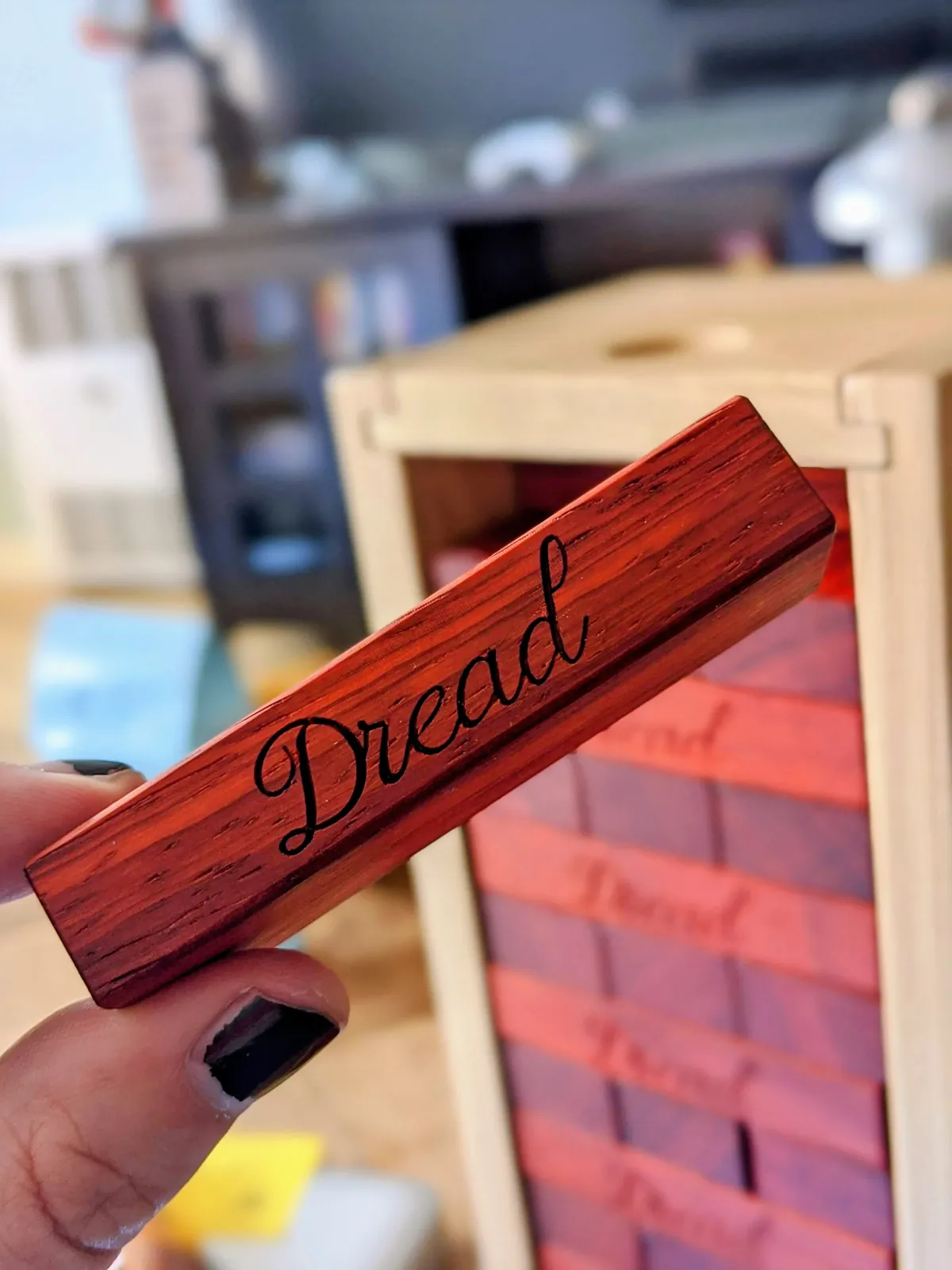
It’s one of the most beautiful games I’ve ever encountered. And that’s why I commissioned someone to make a custom Jenga tower out of special wood, with the word “Dread” etched on the side, as a gift for a friend (that same one who recorded our Fall of Magic sessions). I think it’s one of the most beautiful games ever created, and the reason is the artifact.
Fortunes and the tarot deck
When I make games, I look at how I can build artifacts into them. When I made Fortunes, I worked with the artist Charles Huth on art for the cards, because we wanted to make this an actual tarot deck.
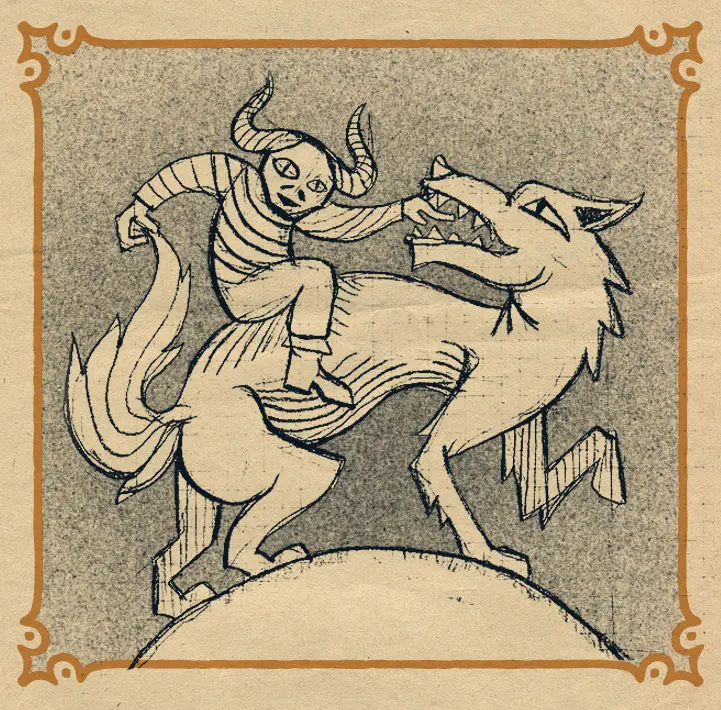
The released version right now is a book, and Fortunes plays with any tarot deck (we have most, if not all, of the art designed for a standalone tarot deck version of the game), because that was my initial goal.
With a tarot deck, it helps you feel like you’re reading the fortunes of the characters whose stories you’re telling. That’s built into the soul of the game. Fortunes wouldn’t exist without it.
Artifact games beyond my favorites
Fortunes, Fall of Magic, and Dread aren’t the only artifact games out there. There are games like Ten Candles, which uses actual candles to show the passage of time. There are epistolary games, where you write letters and are left with artifacts in the form of those letters.
A lot of solo journaling games and single-player RPGs use the same methodology, because journals are also artifacts. Thousand Year Old Vampire is one. The artifact could be the journal you fill in as a player, or it could be something like the playable bookmarks that carry story prompts to enhance play.
Some of these memorable games leave the player with something they can take away from it besides just the ephemeral story.
Why this isn’t Dungeons & Dragons
I don’t know of a game that gets artifacts wrong, because so few games build them into the soul of the game, but there are plenty of games I wouldn’t call artifact games. Dungeons & Dragons is one, but that doesn’t mean you can’t use artifacts to improve it.
People add artifacts to Dungeons & Dragons all the time.
Players cosplay as their characters. They design and fabricate their own weapons in some cases. I’ve even played in a campaign where the dungeon master made special physical potions to hand to the players.
That’s wonderful, and it brings tabletop closer to larp, which is one of the reasons I find the use of artifacts so compelling.
I still wouldn’t call D&D an artifact game. For me, an artifact game has an object built in from the start. Players tend to be super creative, and they build at least as much as the games they play.
Artifact games have artifacts built in from the start. But players can add artifacts to any game they play.
How I use artifacts as a designer and a player
As a game designer and as a person who plays a lot of games, I’m always looking for ways to incorporate artifacts. As a designer, I look for things that could enhance the reality of whatever fiction is being constructed, ideally something new players understand immediately.
That’s why I chose a tarot deck for Fortunes. Most people already have a sense of what a tarot reading feels like. The deck itself helps with the emotional setup as well as the tabletop setup.
As a player, I use artifacts to enhance other kinds of games too. I’ve sent physical letters, encoded with simple pigpen cyphers, to my friends between game sessions.
I’ve also used a wax stamp to sign clues for one of the characters I played in a mystery game.
Artifacts help my players and me exist in the same shared fiction.
When they’re done right, they can do a lot of work with very few words.
More from Autumnal Games
- Fortunes: The Tarot Card Storytelling Game, a storytelling game played with a tarot deck or a regular deck of cards
- Browse all Autumnal Games
- Puzzles
Frequently asked questions
What is an artifact game?
An artifact game is a game that includes something tangible and on-theme that players interact with as part of the game. The artifact enhances the experience, and when it's done right, it does a lot of work with very few words. Dread uses a tumbling blocks tower. Fall of Magic uses a scroll. Fortunes uses a tarot deck.
What's an example of an artifact in a game?
The tumbling blocks tower in Dread is a clear example. When you pull a block away, you feel anticipation and worry the tower will fall, and that dread is the entire goal of the game. Other examples include the scroll in Fall of Magic, the candles in Ten Candles, and the journal in a solo game like Thousand Year Old Vampire.
Is Dungeons & Dragons an artifact game?
Not in the way I use the term. In D&D, players often make their own artifacts to enhance play, cosplaying as their characters or fabricating their own weapons. That's players bolting artifacts on, rather than the artifact being built into the soul of the game. It brings tabletop closer to larp, which is one of the reasons I find artifacts so compelling.
What is a good storytelling game with a physical component?
Fall of Magic and its successor City of Winter both use a scroll as the centerpiece. Dread uses a tumbling blocks tower. Ten Candles uses lit candles. Fortunes uses a tarot deck or an ordinary deck of playing cards. Each one uses a physical object to help players tell a story together.
Does Fortunes need a tarot deck to play?
No. Fortunes plays with a tarot deck or a regular deck of playing cards. The initial thought was to make it a true artifact game with its own tarot deck, and most of the art for that deck is designed, though the released version right now is a book.
Where can I buy Fall of Magic?
Fall of Magic is often sold out. Its direct successor, City of Winter, is designed by the same creator, Ross Cowman, and also uses a scroll as the artifact. It's worth checking out if Fall of Magic isn't available.
What are epistolary and journaling games?
Epistolary games are games where you write letters and are left with those letters as artifacts. Solo journaling games and single-player RPGs use the same methodology, where the journal itself is the artifact. Thousand Year Old Vampire is one example, and it can be played with a plain journal or with playable bookmarks that carry story prompts.
Why do artifacts make games better?
Artifacts help players exist in the same shared fiction. A good one enhances the reality of whatever story is being told, ideally something new players understand immediately. When it's done right, it does a lot of work with very few words, and it can leave the player with something they take away besides the story.

Jim makes games and events that invite people to embrace a shared fiction.